
Introduction
Manufacturing industries constantly seek ways to improve productivity, accuracy, and cost efficiency. One of the most powerful advancements in modern machining is 5-axis machining. Unlike traditional 3-axis machining, which moves tools along the X, Y, and Z axes, 5-axis machining adds two additional rotational axes. This capability allows manufacturers to produce highly complex parts with greater precision, fewer setups, and significantly improved efficiency.
This article explores how businesses can maximize efficiency using 5-axis machining, the advantages it offers, and best practices for implementing it in modern manufacturing.
What is 5-Axis Machining?
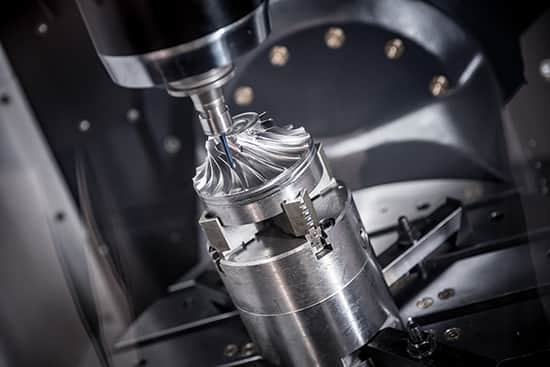
5-axis machining refers to CNC machining processes that move a cutting tool or part along five different axes simultaneously. The three linear axes (X, Y, Z) are combined with two rotational axes (typically A and B or B and C).
This allows the cutting tool to approach the workpiece from virtually any direction, enabling the production of complex geometries that would otherwise require multiple setups or specialized tooling.
Key Benefits of 5-Axis Machining
1. Reduced Setup Time
Traditional machining often requires multiple setups to reach different surfaces of a part. Each setup increases labor time and the risk of alignment errors.
With 5-axis machining:
- Multiple surfaces can be machined in a single setup
- Reduced repositioning of the workpiece
- Faster overall production cycles
This dramatically improves workflow efficiency and reduces production delays.
2. Higher Precision and Accuracy
Every time a part is repositioned in conventional machining, there is potential for human or alignment error.
5-axis machining minimizes this issue by allowing the tool to access complex areas without moving the part multiple times, resulting in:
- Higher dimensional accuracy
- Improved surface finishes
- Reduced tolerance errors
This is especially valuable in industries such as aerospace, medical, and automotive manufacturing.
3. Capability to Produce Complex Geometries
Modern product designs often require intricate shapes, curved surfaces, and tight tolerances.
5-axis machining excels at producing:
- Turbine blades
- Medical implants
- Aerospace components
- Complex molds and dies
By enabling simultaneous movement across five axes, manufacturers can create parts that would be extremely difficult or impossible with traditional machining methods.
4. Shorter Production Cycles
Because 5-axis machining reduces setups and improves cutting efficiency, production cycles become significantly shorter.
Advantages include:
- Faster material removal
- Continuous machining processes
- Reduced manual intervention
The result is higher throughput and faster delivery times.
5. Improved Tool Life
5-axis machining allows the cutting tool to maintain optimal angles relative to the workpiece.
This leads to:
- Better chip evacuation
- Reduced tool wear
- Less vibration during cutting
Improved tool life means lower tooling costs and fewer machine stoppages.
Best Practices for Maximizing Efficiency
Invest in Advanced CAM Software
Modern CAM (Computer-Aided Manufacturing) software helps generate optimized toolpaths for complex 5-axis movements. Efficient programming ensures smoother machining and reduced cycle times.
Proper Machine Calibration
Regular calibration ensures that the machine maintains high accuracy across all axes. Even minor misalignments can affect precision.
Skilled Operators and Programmers
Although automation plays a significant role, experienced machinists and programmers are crucial for optimizing toolpaths, selecting appropriate cutting strategies, and troubleshooting machining challenges.
Optimize Workholding
Proper fixturing ensures that parts remain stable during machining. Efficient workholding also allows full access to the workpiece for multi-axis operations.
Simulation Before Machining
Simulation tools help detect:
- Potential collisions
- Inefficient toolpaths
- Programming errors
This reduces costly mistakes and machine downtime.
Industries Benefiting from 5-Axis Machining
Several high-tech industries rely heavily on 5-axis machining:
Aerospace – turbine blades, engine components
Medical – implants, surgical instruments
Automotive – performance engine parts
Defense – precision components
Energy – complex turbine and generator parts
These industries require high precision and complex designs, making 5-axis machining essential.
Conclusion
5-axis machining represents a major leap forward in modern manufacturing technology. By enabling complex geometries, reducing setup times, improving precision, and shortening production cycles, it allows manufacturers to achieve greater efficiency and competitiveness.
As industries continue to demand higher performance and more intricate designs, investing in 5-axis machining technology will remain a key strategy for companies looking to optimize productivity and stay ahead in the manufacturing landscape.
Organizations that combine advanced machinery, skilled operators, and optimized programming can fully unlock the efficiency benefits that 5-axis machining offers.
Hi, this is a comment.
To get started with moderating, editing, and deleting comments, please visit the Comments screen in the dashboard.
Commenter avatars come from Gravatar.